Doctor Blade for Printing: Types & Uses
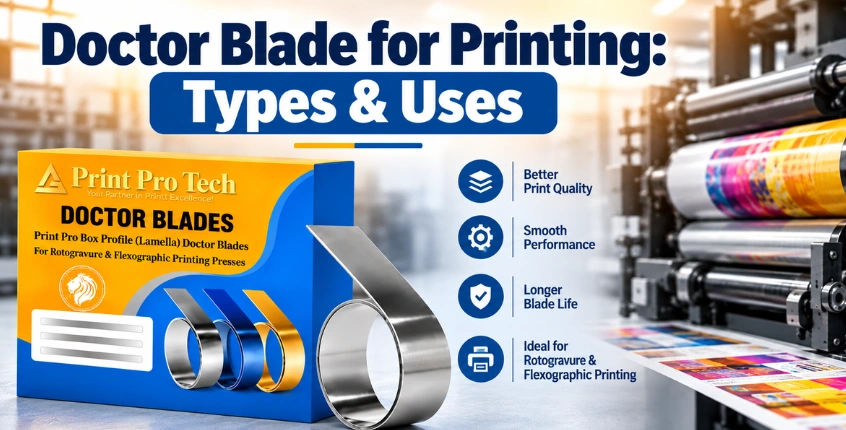
A doctor blade for printing controls the amount of ink transferred during the printing process. It removes excess ink from a gravure cylinder or anilox roller.
- This helps maintain:
- Consistent colour.
- Uniform ink coverage.
- Sharp print quality.
- Controlled ink consumption.
- Stable production results.
Print Pro Tech supplies doctor blades for gravure and flexographic printing applications. Its range includes stainless steel, carbon steel, polymer, and plastic doctor blades for accurate ink metering and reliable press performance. This guide helps you understand its function and applications in selecting a suitable option for your printing operation.
What Is a Doctor Blade in Printing?
A doctor blade is a thin, precision-engineered blade used in a printing press to remove excess ink from a printing surface. Its primary purpose is to maintain controlled and consistent ink transfer.
In gravure printing, the blade works with an engraved cylinder. The cylinder contains small recessed cells that hold ink. The blade wipes ink from the surface and leaves ink inside these cells.
In flexographic printing, the blade commonly works with an anilox roller. The roller has engraved cells that carry a controlled amount of ink. The blade removes extra ink from the roller surface before the ink reaches the printing plate.
In simple terms, a doctor blade helps ensure that the printing surface carries the correct amount of ink.
How Does a Doctor Blade Work?
The working principle of a printing doctor blade is relatively straightforward.
- Ink enters the printing or metering system.
- The gravure cylinder or anilox roller picks up ink.
- The blade contacts the surface.
- Excess surface ink is removed.
- Ink remains inside the engraved cells.
- The measured ink transfers to the substrate.
The process can be shown as:
Ink supply → Ink pickup → Excess ink removal → Controlled ink film → Ink transfer
Correct blade contact is important. Poor alignment, excessive pressure or a damaged edge can affect ink metering and print quality.
In flexographic printing, the blade must be correctly aligned with the anilox roller. The contact angle depends on the press, blade design and application. Always follow the equipment manufacturer’s recommended settings.
Types of Doctor Blades
Doctor blades are available in different materials, thicknesses, widths and edge profiles.
Stainless Steel Doctor Blades
Stainless steel doctor blades can be suitable for applications where corrosion resistance is important.
They may be used with:
- Water-based inks.
- Corrosive ink environments.
- Demanding cleaning conditions.
- Applications requiring stable performance.
The correct grade should be selected according to the ink and operating environment.
Carbon Steel Doctor Blades
Carbon steel is used in several gravure and flexographic applications.
Its performance depends on:
- Steel quality.
- Blade thickness.
- Edge design.
- Ink abrasiveness.
- Press conditions.
Carbon steel doctor blades may be selected where reliable wiping and cost-effective operation are required.
Polymer and Plastic Doctor Blades
Polymer and plastic doctor blades are used for selected printing applications.
They may be considered when:
- A non-metallic blade is preferred.
- The printing surface requires special protection.
- The application has specific chemical requirements.
- A particular wiping effect is needed.
Print Pro Tech supplies polymer and plastic doctor blades for application-specific requirements. The correct option depends on the press, ink and printing surface.
Coated Doctor Blades
Some metal doctor blades include specialised coatings.
Coatings may help improve:
- Wear resistance.
- Service life.
- Chemical resistance.
- Performance with abrasive inks.
The coating must be compatible with the printing surface and ink system.
Applications of Doctor Blades in Printing
Doctor blades are used across several printing applications where controlled ink transfer is required.
Common applications include:
- Flexible packaging printing
- Label printing
- Gravure packaging
- Flexographic packaging
- Film printing
- Paper printing
- Decorative printing
- Industrial printing applications
The specific doctor blade for printing required can vary depending on the press design, substrate, ink formulation, printing speed and production requirements.
How to Choose the Right Doctor Blade
Consider the following points before selecting a printing doctor blade:
Printing process: Identify whether the blade is for gravure or flexographic printing.
Printing surface: Check whether it will contact a gravure cylinder, anilox roller or coating roll.
Ink type: Consider water-based, solvent-based, UV or abrasive inks.
Ink condition: Check viscosity, contamination and pigment characteristics.
Blade material: Select stainless steel, carbon steel, polymer, plastic or coated metal.
Blade thickness: Match the thickness to the press and holder system.
Blade profile: Choose the required straight, bevel or lamella profile.
Press speed: Higher speeds may require better wear resistance and precise blade control.
Contact angle: Follow the press and blade manufacturer’s recommended setting.
Pressure: Use only enough pressure to achieve a clean, stable wipe.
Surface condition: Inspect the anilox roller or gravure cylinder before installation.
Holder condition: Check alignment, mounting and parallel contact.
Print Pro Tech provides technical guidance to help customers select suitable printing consumables according to press type, substrate and production requirements.
Conclusion
A doctor blade for printing is essential for controlled ink metering in gravure and flexographic processes. It removes excess ink and helps maintain consistent colour, coverage and print quality.
Selecting the appropriate blade requires consideration of the printing process, material, thickness, ink system, press speed and operating environment. Regular inspection and proper system maintenance can also help maintain consistent performance.
For printing operations experiencing ink-transfer variation, streaking, or inconsistent print results, understanding the role of the printing doctor blade is an important step toward identifying the right solution.
Print Pro Tech is a trusted doctor blade supplier in India for gravure and flexographic printing applications. The company supplies doctor blades for gravure cylinders and flexographic anilox rollers, including stainless steel, carbon steel, polymer and plastic options. To find a suitable blade, share your press type, ink system, blade dimensions and operating conditions with the Print Pro Tech team.
FAQs
1. What is a doctor blade in printing?
A doctor blade is a precision blade used in printing presses to remove excess ink from a gravure cylinder or anilox roll. It helps control ink transfer and maintain consistent print quality.
2. What is the main function of a doctor blade?
The main function of a doctor blade is to meter ink by wiping excess ink from the surface of a cylinder or anilox roll while allowing the required amount of ink to remain in the engraved cells.
3. How does a doctor blade work in flexographic printing?
In flexographic printing, the doctor blade removes excess ink from the anilox roll surface. The ink remaining inside the engraved cells is then transferred to the printing plate in a controlled manner.
4. How does a doctor blade work in gravure printing?
In gravure printing, the doctor blade wipes excess ink from the surface of the engraved printing cylinder. The ink retained inside the recessed cells is transferred to the substrate during printing.
5. What are the different types of doctor blades?
Common types include carbon steel, stainless steel, polymer and coated doctor blades. The appropriate type depends on the printing process, ink, press speed, anilox roll or cylinder and production requirements.
6. How do I choose the right doctor blade for my printing machine?
Doctor blade selection depends on factors such as blade material, thickness, edge profile, ink type, printing process, press speed, anilox or cylinder specifications and required wear resistance.
7. What causes streaks or uneven ink transfer when using a doctor blade?
Streaks and uneven ink transfer can result from blade wear, incorrect pressure or angle, damaged blade edges, contamination, improper blade selection or issues with the anilox roll or printing cylinder.
8. Where can I buy doctor blades in India?
Doctor blades can be sourced from specialized printing-consumable suppliers. Print Pro Tech supplies doctor blades for gravure and flexographic printing applications, with different materials and specifications available according to application requirements.
Related Blogs